Learn genetic engineering by actually doing it - guided by world-class scientists, including Dr. George Church, one of the founding figures of modern genomics.
This isn't a passive course. You'll perform real experiments with real equipment while following structured video lectures that explain the science behind what your hands are doing.
The course features guest lectures from Dr. George Church (Harvard - one of the original architects of the Human Genome Project and a pioneer of CRISPR) and Dr. Kate Adamala (University of Minnesota - synthetic cell biology). They don't just explain concepts. They show you how working scientists think.
By the end, you'll have run bacterial transformations, worked with fluorescent proteins and CRISPR components, practiced with professional micropipettes, and built a real foundation in molecular biology that goes well beyond most introductory textbooks.
WHAT YOU'LL DO
- Perform bacterial transformations using GFP and biosensor plasmids
- Practice sterile technique and pipetting with calibrated professional micropipettes
- Run CRISPR experiments with Cas9, guide RNA, and repair templates
- Work through structured lab sessions tied directly to the lecture content
WHAT YOU'LL LEARN
- DNA structure, gene expression, and how genes are controlled
- Plasmids, bacterial transformation, and antibiotic selection
- Fluorescent proteins and how researchers use them as molecular trackers
- The foundations of CRISPR-Cas9 gene editing
- Core lab skills: pipetting, sterile technique, agar preparation, colony picking
PERFECT FOR
Absolute beginners who want a real education, not just a demo. Ideal for career changers entering biotech, software engineers working on computational biology, homeschool high schoolers, and anyone who learns best by doing.
NOTES
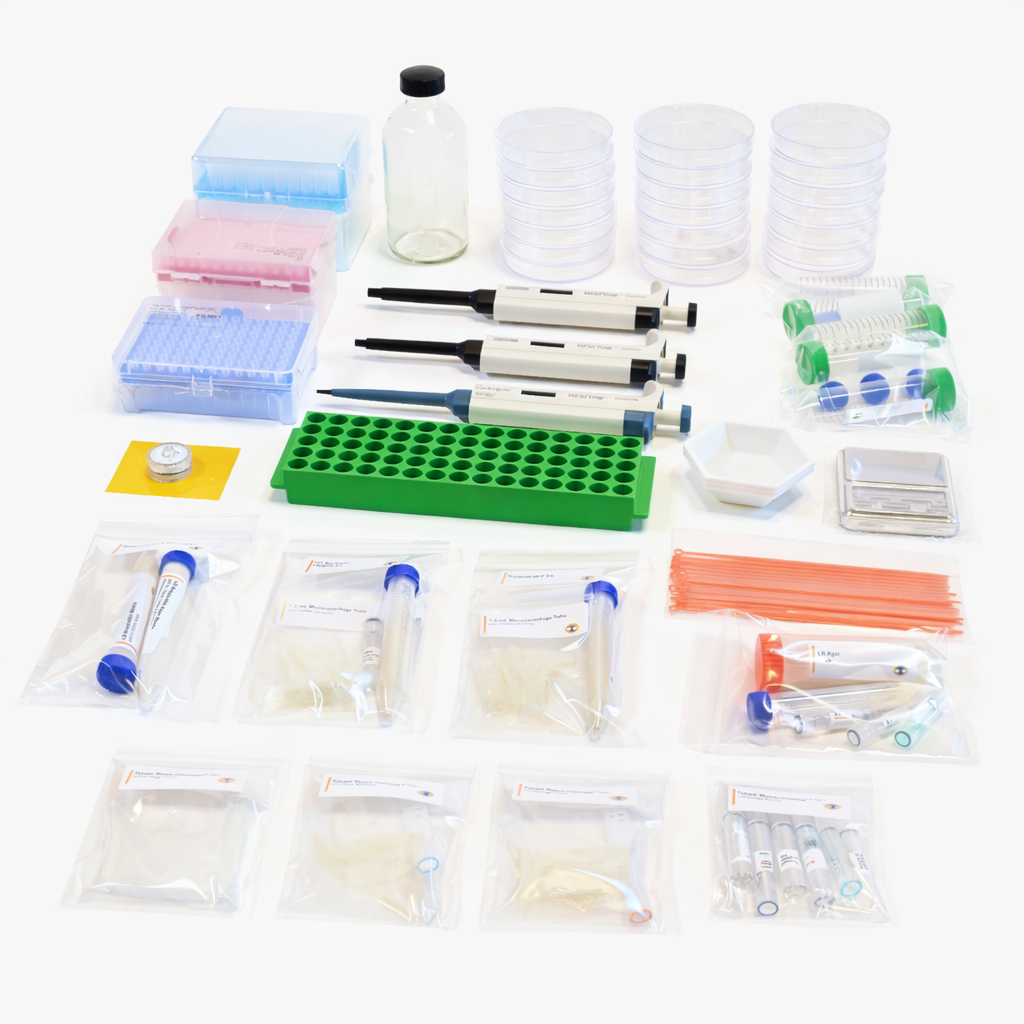
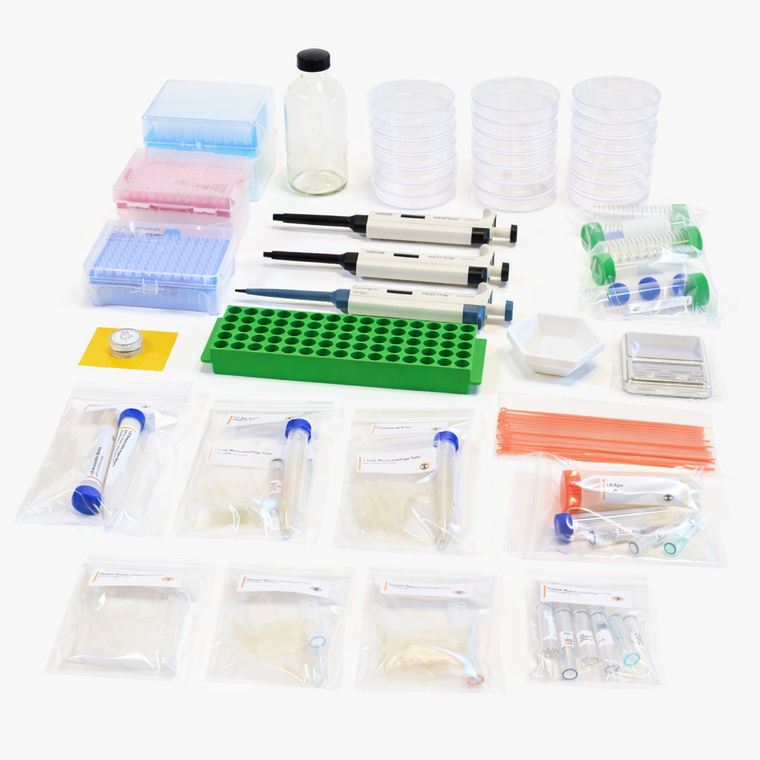
• The $199 tier includes perishables, media, and plastics. The $349 tier adds all durable lab equipment: three calibrated micropipettes, a precision scale, and visualization filters. Choose the full kit if you don't already own lab equipment.
• Course access is digital. All biological materials are freeze-dried and stable at room temperature.
What’s Included:
Biological Materials
-
Engineered bacterial strains (pDusk/pDawn Biosensors Kit), Non-pathogenic, freeze dried
Engineered bacterial strains (E. coli DH10B strain w/ pJE202 plasmid), Non-pathogenic, freeze dried
Non-pathogenic E. coli (DH5α strain), freeze dried
Cas9 expression plasmid
Guide RNA plasmid
DNA repair template
Fluorescent protein plasmid (GFP)
Media & Reagents
Lab Supplies
Digital Materials
A link to the last classes syllabus can be found here
A link to Molecular Biology of the Cell can be found here
Example Experiment
Example Lecture