Posted by Dariia Dantseva, Lead Product Development Scientist on 27th Apr 2026
Why we built our genomics service around your privacy - and what that actually means
When we launched whole genome sequencing two days ago, I expected questions about the science. What I didn't expect was how many people would write to us - before buying anything - to ask a single question: what happens to my data?
That told me something important. People aren't afraid of genomics. They're afraid of what companies do with genomic data once they have it. And honestly? That fear is completely reasonable.
So I want to explain exactly what we do, why we do it, and why I think we're different - not as a sales pitch, but because you deserve to know before you hand us something as personal as your genome.
The problem with most genomics companies
The business model of most consumer genomics companies is not sequencing. It's data.
They charge you a low upfront price, sequence a fraction of your genome, and then make their real money licensing your genetic data to pharmaceutical companies, researchers, and insurers. 23andMe built a drug development division on customer data. AncestryDNA has sold access to its database. The sequencing kit is the acquisition cost. You are the product.
This isn't a secret - it's buried in their terms of service. Most people don't read it. And most companies are counting on that.
How we're structured - and why it matters
The ODIN is 100% owned by our CEO, Josie Zayner. There are no investors. There is no board. There is no one calling me asking when we're going to monetize the data asset.
I know what that pressure does to companies. I've watched it happen. The moment you take outside money, you take on obligations to people whose interests are not aligned with your customers. Eventually those interests come into conflict, and the investors win.
We don't have that problem. We make money from sequencing. That's it. Your genome is not a revenue line.
What we actually do with your data
We sequence your genome and give you the files. That's the complete transaction.
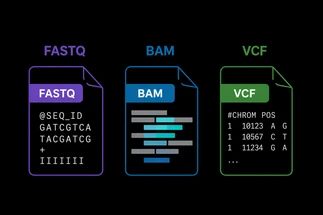
You receive three things: your raw sequencing reads (FASTQ), your reads aligned to the reference genome (BAM), and your variant call file (VCF). These are industry-standard files that you can take anywhere, analyze with any tool, share with any researcher or clinician you choose.
We do not analyze your data for our own purposes. We do not build health profiles. We do not infer anything from your genome. We perform the technical processing required to produce your files - alignment, variant calling - and then we're done.
We do not sell your data. We do not license it. We do not share it with researchers, pharmaceutical companies, insurance companies, or anyone else. Not ever. Not under any circumstances.
You choose what happens to your data after delivery
When you place an order, you make a choice: retain or delete.
Retain means we keep your files on encrypted US-based servers. You can access them, download them again, or request deletion at any point in the future.
Delete means that within 30 days of delivering your results, we permanently and irreversibly destroy all copies of your genomic data - including any working files generated during processing. Once that deletion is executed, the data is gone. There is no backup. We cannot recover it even if we wanted to.
This is not a standard feature in this industry. Most companies make deletion difficult, bury it in a support ticket process, or don't offer it at all. We put it at the point of purchase because we think it should be a decision you make consciously, not something that happens by default in our favor.
Where your data lives
Several people have asked specifically about this - and it's a fair question given that at least one major competitor used sequencing infrastructure in China, which raised real privacy concerns. Our sequencing machines are in the United States. Your data is stored on AWS servers in the United States. It does not leave the US. It is not processed offshore.
What we don't do
We don't use tracking pixels or behavioral advertising cookies. We don't build advertising profiles. We don't use analytics tools that share your data with third parties. We don't infer health conditions, ancestry, or any other attributes from your genome for our own use.
We collect what we need to fulfill your order - your name, shipping address, email, and payment information. Payment is processed by a third-party processor. We don't store your card details.
If we ever change our mind
We won't. But if we did - if this company ever changed ownership, took outside investment, or revised our approach to data - we would notify every customer directly by email before any change took effect. You would have the opportunity to request permanent deletion of your data before new terms are applied.
That's not a legal formality. It's a commitment.
One exception - and it's entirely your choice
Everything above applies to human genomic data without exception. But I want to be transparent about something we're doing on the animal side, because transparency is the whole point of this post.
There are remarkably few high-quality whole genome sequences of animals in public databases. Horses, dogs, livestock, exotic species - the scientific community genuinely needs more of this data to advance veterinary medicine, conservation biology, and our understanding of genetics across species. It's an area where citizen science can make a real contribution.
So here's what we're offering: if you sequence a non-human animal with us and choose to let us use that genome for open science - contributed to research, potentially published, helping build the world's genomic knowledge of that species - we'll give you a $50 coupon toward any ODIN kit.
This is entirely opt-in. You choose it explicitly at the time of your order. If you don't choose it, your animal's genome is treated exactly the same as human data - yours completely, never shared, deleted on request. If you do choose it, you're not just getting a sequencing service. You're contributing something real. Every well-sequenced genome added to the scientific record makes the next study more powerful, the next veterinary insight more accessible, the next conservation effort better informed.
We think that's worth something. Hence the $50.
Why I'm writing this
One of the first people to email us about privacy got a clear answer about how we handle data and replied: "This is for what I've been waiting. Sold."
That response made me realize that the privacy policy - as clear as we tried to make it - isn't enough on its own. People need to understand not just what the rules are, but why the rules exist and whether the person writing them actually means it.
I mean it.
Genomic data is the most personal information that exists. It's information about your health, your family, your ancestry, your biology. It deserves to be treated accordingly - not as an asset to be monetized, but as something that belongs to you and only you.
That's what we built. I hope it's what you've been waiting for too.
Have questions? Email us at odin@the-odin.com. We respond to every message.